Sunday, February 24, 2013

First Hand Report


As the protests developed into riots this week, and the Bulgarian government fell, we followed the developments second hand.  Today we bring you a first hand report.  Sasha went downtown to find out for herself what is going on.  Why are the people protesting?  What changes do they want?  What are their concerns?

She came back with a camera full of pictures, and reports of a well organized and peaceful protest.  For this we are very grateful.  Previous demonstrations have turned violent and clashes with police riddled the news reports this past week.  Pictures of bloodied protesters and bombardments of tear gas have been all over the news.  Though the police were present today, there was no clash of forces.  The demonstration today has been peaceful so far.

As Sasha witnessed the parades of protest, the flying flags, and the signs of discontent, there seemed to be a common theme.  The people of Bulgaria want to live normal fair lives.  They are not looking for handouts they are looking for a fair chance to make a good life for themselves.  The protests are primarily against the government produced energy monopoly that has made life quite expensive in Bulgaria.  This is not a protest against one specific party.  It is a protest against a culture of corruption that has lasted for decades.  It is a call to the end of the mafia control of government that has largely replaced the socialist dictatorship that preceded it.

One sign Sasha saw read, "I want to study, work, and live in Bulgaria!"  For years students have graduated and then sought work in other countries.  There has been little desire to live in Bulgaria because there is little opportunity for advancement.  The young people of Bulgaria want to be able to make a life for themselves without having to move abroad.  Political corruption has made this difficult.

Protests have been common around the world in recent years.  In Europe and America there have been protests against certain political parties.  There have been protests against government cuts.  Such protests seem to be childish as the people demand the government to give them something that the country cannot afford.  They are like a teenager throwing a fit because Daddy won't buy her a car.

The protests in Bulgaria are more of a call to get the government out of the way.  To allow freedom for the individual to make his own life without unnecessary government intervention.  It is not a protest against one party.  It is a protest against all political parties.  It is a call for statesmanship on the part of Bulgaria's leaders.

For Sasha this was a powerful event to attend.  She was a teenager when communism fell and did not attend those protests.  It was interesting for her to attend this event and see first hand the changes that are happening in her country.  Time will tell if these changes are good, bad, or neutral.


The atmosphere seemed to be a good one this morning.

The march was all over downtown.  All the major government buildings had protesters in front of them.

Protesters carry a sign asking for a normal life.


The sign reads, "This is not a protest.  This is a process."

Thousands marched on Sofia today.

The flags show that these are people who love Bulgaria.


A police officer watching the protest.  No need for the riot helmet today.

Wednesday, February 20, 2013

Protests

In downtown Sofia, over the past few days, protesters have clashed with police in demonstrations turned violent.  The protests are against high energy prices and corruption with the energy company.  This weekend, protesters are calling for an overnight sit in downtown.  Here are some pictures of the action.

Protesters on parade near the Bulgarian national judicial building.

Other protesters.  I'm sure there is a reason for the strange outfits.  I'm just not sure what it is.

Wednesday, February 13, 2013

Nevsky Cathedral


Today we are continuing on our series on interesting places in Bulgaria with a building that really shines, especially on a sunny day with that gold roof.

The Alexander Nevsky Cathedral in down town Sofia is one of the largest orthodox cathedrals in the world. If you pick up any book on Bulgaria, you are certain to find a picture of this building inside (and quite possibly on the cover as well).  It is the cathedral of the patriarch of the Bulgarian Orthodox church.

This building is beautiful from any angle.  The golden domes can be seen glistening in the sun while hiking on nearby Vitosha mountain.  If you come to Sofia, and miss out on Nevsky Cathedral, you have missed out on Sofia.

Monday, February 4, 2013

Interesting Places in Bulgaria

Most of you have never been here.  So I decided it might be fun to do the occasional post on interesting places in Bulgaria.  I'm starting out today with what is one of my favorite buildings in Sofia.  We stumbled upon it one day while out for a drive on Vitosha Mountain.  This mountain is home to some of Sofia's nicest neighborhoods, so beautiful homes are not uncommon.  Yet I was not prepared for Sasha's outburst when we passed an interesting building.

She exclaimed, "Look at that!  What is that!."  I was a bit afraid that something serious was happening like the eruption of Vitosha or a large lizard ravaging downtown Sofia.  She made me turn the car around, and that's when I saw the snail house.


We did some research on this lovely little gem of a home.  It turns out that it is made from a special mix of concrete that makes it very energy efficient.  We just love the way it looks.  It is a family home, not a daycare, school, or business.  It is about 4 stories tall, and there is a nice balcony right behind the snails head.  I have never seen pictures of the inside, but really, do we need to see the inside?  The outside tells us enough about the owners.  I can only imagine that they are fun people.  I mean after all, they live in a giant snail.

Come to Bulgaria!  See the snail house.

Tuesday, January 29, 2013

Brave

I just read Acts 5.  For those of you not familiar with this chapter, the apostles (Jesus' closest followers) appeared before the religious leaders of first century Jerusalem.  The leaders told the apostles not to talk about Jesus.  Peter and the other apostles replied by saying that they must obey God, rather than man.  The leaders had the apostles flogged, and sent them on their way.

I noticed something interesting as I read this passage.  The motives of the religious leaders are jealousy, and fear of appearing guilty.  These are pretty petty reasons to punish someone, but then again these leaders were apparently pretty petty men with no confidence in their position of authority.  If they really thought they were God's teachers, why were they so afraid of Jesus?  True teachers don't fear the truth even when it is uncomfortable, and they don't fear falsehood because the truth shows it for what it is.  Their fear came from a realization that Jesus presents a truth they didn't want to embrace.

Then I went back to the apostles, and thought about Peter's response to their orders.  Why obey these petty pathetic cowards over God?  Even though they had the power to flog or kill the apostles, Peter saw them for who they were.  Cowards afraid to stand up for the truth.  Peter and his friends chose to obey God rather than man.  Given the quality of the men who wanted their obedience, the choice seems simple.

We who follow Christ must neither fear, nor answer to cowardly petty people.  Answer to God.  Be brave in proclaiming the truth.

Be brave!

Sunday, January 20, 2013

Paul and Covey

This evening, our Bible study read chapters 2 and 3 of Romans.  We discussed the Jewish Law  (the first five books of the Bible) and how it does a great job of showing us our sin, but it is useless in removing sin.  Only Jesus saving work through His death and resurrection can save us.

Later tonight I was reading Stephen Covey's book The Speed of Trust.  For those of you not familiar with Covey's book, it's about trust and ethics.  It is not written from a Christian perspective.  For all I know Stephen Covey could be an atheist, Christian, or Hindu.  His spiritual beliefs have not come into the discussion in the book yet (and likely never will).  Yet he unintentionally hit on a point very similar to what we read in Romans. 

Covey quotes Alan Greenspan (former Chairman of the U.S. Federal Reserve), "Rules cannot take the place of character."

This is a good summary of our Roman's discussion tonight.  At the time of Paul's writing, the rules of the Old Testament had been around for centuries.  Yet there was very little difference between a culture that had access to The Law and those that did not.  Rules can't change a person's heart.  Each of us is fallen and sinful.  That's why we need Jesus.

Of course, Jesus did not come to institute a new set of rules.  The Law needs no revision.  It does its job with the perfection God intended.  Measuring tape can show you if a piece of wood is the right shape, but it can't cut it for you.  This does not mean it is bad.  It does what it was intended to do.  The Law is a measuring tape.  Jesus is the carpenter.  He came to change hearts.  He came to free us from the rules.

Covey hit on this point as well when he quoted Albert Camus, "Integrity has no need for rules."

Jesus sets us free from the law of sin and death.  His work on the cross not only saves us from Hell and grants us access to Heaven.  It cleans our hearts and makes us a new creation.  Jesus frees us by making us people of integrity.  I wish the process would happen faster.  I tire of seeing flaws in my life, and I look forward to my final liberation from sin on the day of His return.  Yet there is undoubtedly a change happening in my life.  I am not the man I once was, and I am not the boy I was before that.  The medicine has been given.  The cure is taking effect.  Jesus has freed me from my sinful life, and He continues to free me.

He can free you too if you believe.

Friday, December 28, 2012

The Top of Bulgaria

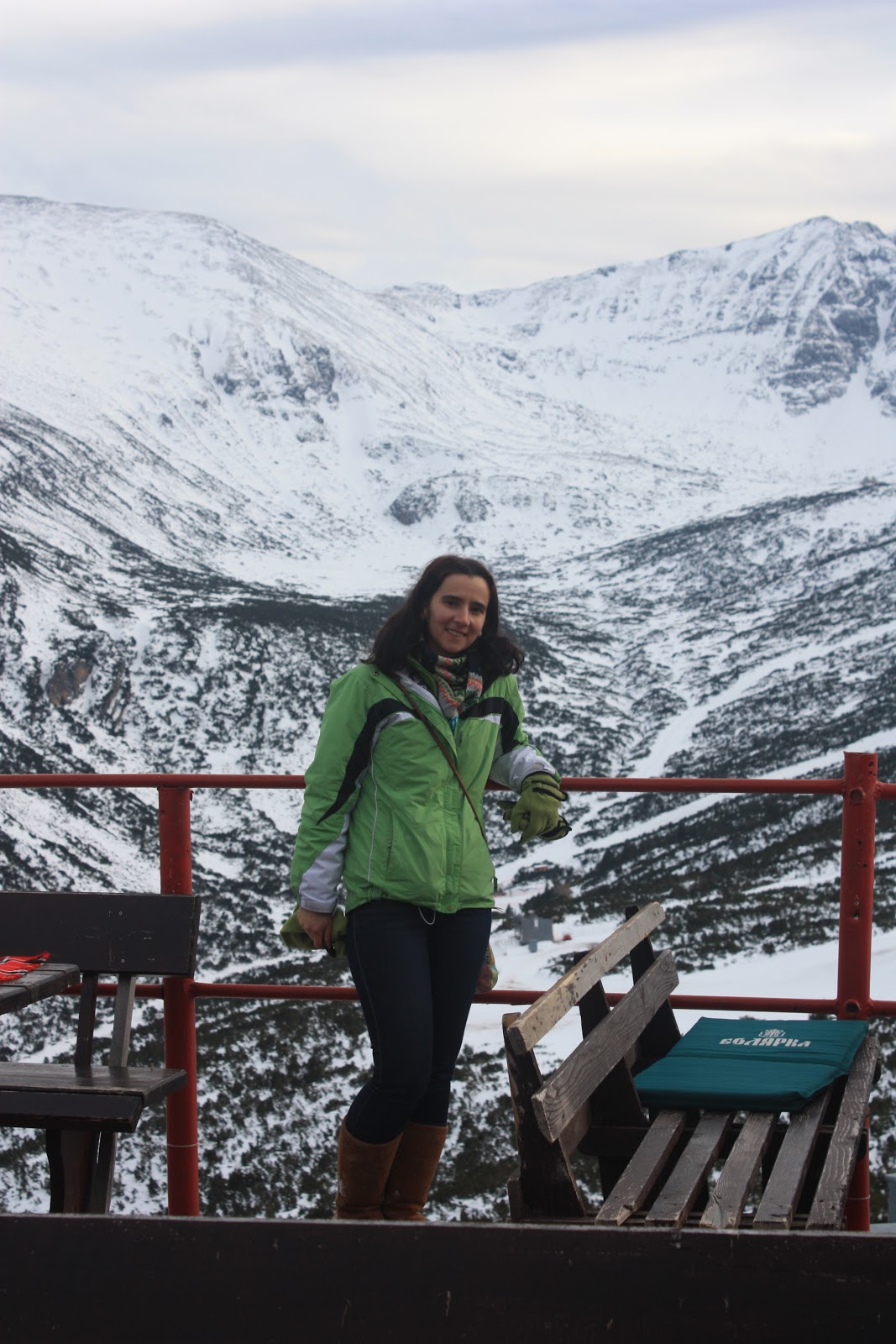
This afternoon, Sasha, Kenny, and I took a cable car up Rila (a big Bulgarian mountain) to a point near Musala (the highest point in the Balkans).  From there you can see a large part of Bulgaria, and even Serbia on a good day.  Here is what we saw.


The view on the way up and down was breathtaking enough.


The big tough mountain climber.


A beautiful woman on a beautiful mountain.


It will be nine years next month since we first went up together.  It was fun to be back.


Do you think we can climb to the top?


Maybe we should wait for better weather.


Beautiful views of Bulgaria on the left and the right.


Team Sofia, at the top of Bulgaria.